
Creative Edge Outdoor Solutions
Sod Installation in Lakeland, FL
Replace bare soil, construction damage, or a worn lawn with fresh sod installed around the property’s sunlight, irrigation coverage, drainage, soil preparation, and long-term maintenance needs.
Local lawn installation
Plan the new lawn around the property beneath it.
Creative Edge reviews the existing turf, soil, grades, shade, drainage, sprinkler coverage, beds, walkways, trees, and intended use before the installation scope is finalized.
Sod installation project builder
Build your sod installation plan.
Tell us about the existing lawn, approximate square footage, sunlight, irrigation coverage, drainage, access, grading, and the type of new lawn you want. The builder will organize the details for a more useful sod installation estimate.
1 of 8
Your preliminary planning summary
Selected service
Project complexity
Planning confidence:
Preferred timeline:
Recommended focus
Why this range
This preliminary planning range uses standardized Lakeland and Polk County market assumptions. It is not a quote, contract, guarantee, or offer. Final pricing requires an on-site assessment, verified measurements, material selections, access review, utility review, and confirmation of existing conditions.
A complete sod installation plan
Four parts of the job need to work together.
Sod can provide an immediate finished surface, but appearance on installation day is only one measure. The site must also support root contact, consistent moisture, drainage, and the maintenance routine expected after establishment.
From ground preparation to first mowing
Remove.
Prepare.
Install.
Establish.
Skipping an early step usually shows up later as unevenness, dry areas, gaps, weak rooting, water problems, or a lawn that never performs consistently.
Clear the installation area
Address existing turf, weeds, roots, debris, construction material, and other conditions that interfere with a clean, consistent finished surface.
Set grade and soil contact
Smooth the area, correct practical grade issues, prepare the upper soil layer, and preserve appropriate transitions at walks, drives, beds, and drains.
Place sod tightly and evenly
Coordinate delivery, stagger seams, reduce gaps, shape edges, avoid unnecessary drying, and establish full contact with the prepared surface.
Water, protect, and observe
Begin the appropriate watering plan, limit traffic, monitor rooting and moisture, and delay mowing until the sod is ready.
Sod selection
Match the grass to sunlight, use, and maintenance.
No turf variety is automatically right for every Central Florida yard. Shade, irrigation, soil, traffic, mowing expectations, appearance, pest pressure, and product availability should guide the decision.
St. Augustine considerations
Often used in Florida landscapes, with variety-specific differences in shade response, texture, maintenance, and environmental tolerance that should be matched to the site.
Zoysia considerations
May appeal to properties seeking a dense finished lawn, while establishment, mowing, irrigation, thatch, sun exposure, and maintenance expectations still require review.
Bermuda considerations
Commonly associated with sunny, actively used areas, but light, mowing height, growth pattern, irrigation, boundaries, and maintenance intensity must fit the property.
Plan for the lawn after installation
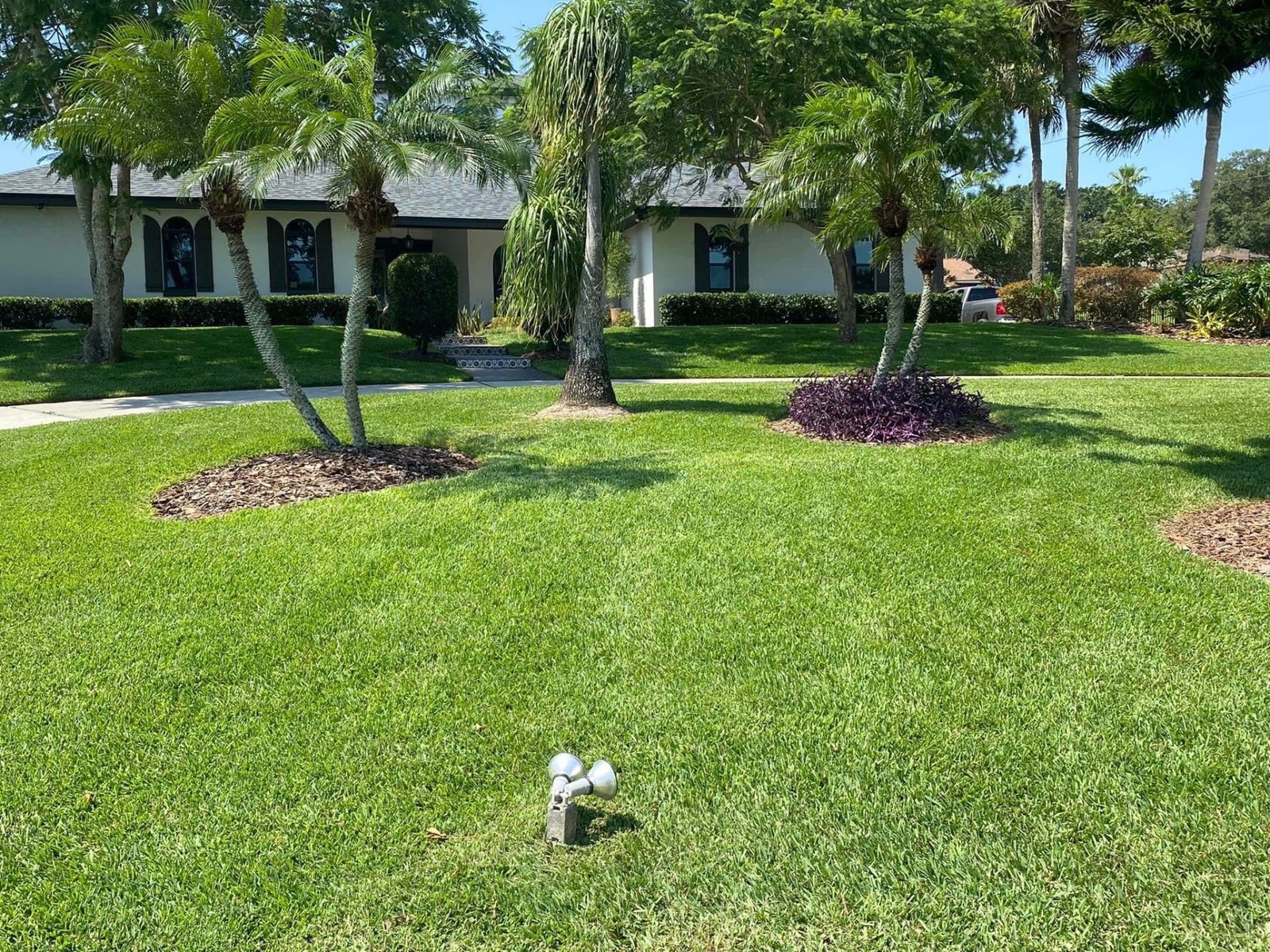
A new lawn still depends on water, mowing, and observation.
Fresh sod needs consistent moisture while roots begin connecting with the prepared soil. The watering approach should respond to the sod, soil, drainage, weather, sun, shade, and actual moisture—not only a fixed timer.
Before installation, review whether the existing irrigation system covers the new lawn evenly. Dry corners, blocked heads, overspray, runoff, low pressure, and mismatched zones can become visible quickly during establishment.
Preparation and drainage
Correct practical site problems before covering them.
Sod follows the surface below it. High areas, depressions, debris, abrupt edges, compacted zones, or poor water movement do not disappear simply because new grass is placed on top.
Early sod care
The establishment period cannot be treated like a mature lawn.
Watering, traffic, mowing, weather, root development, and problem areas should be watched closely. Instructions must be adjusted to the installed sod and actual property conditions.
Keep moisture consistent
Begin promptly, prevent drying, avoid persistent saturation, and check edges, slopes, sunny areas, and irrigation gaps directly.
Limit unnecessary traffic
Reduce foot, pet, equipment, and furniture movement while the sod is soft and roots are beginning to connect with the soil.
Watch seams and rooting
Look for lifting edges, shrinking gaps, discoloration, standing water, runoff, movement, pest activity, or areas that are not beginning to anchor.
Wait until the lawn is ready
Delay mowing until the sod has begun rooting and conditions are suitable, then follow the appropriate height and equipment practices for the grass.
New construction and lawn replacement
Different starting conditions require different scopes.
A new-construction property may need debris removal, finish grading, irrigation review, bed coordination, and careful transitions around new concrete or hardscape.
A lawn replacement begins with a different question: why did the existing turf decline? Shade, irrigation coverage, drainage, soil, traffic, pests, maintenance, tree roots, or the wrong turf for the location may need to be considered before replacement.
Coordinate the surrounding landscape
Set bed and lawn edges before the sod arrives.
A broader landscape design and build plan can establish bed shapes, new plant and tree installation, walkways, patio edges, drainage relationships, and irrigation changes before the finished lawn is cut into place.
That sequence reduces unnecessary disturbance and creates cleaner relationships between turf, beds, trees, structures, and hardscape.
Completed Creative Edge work
See how new lawn areas complete a landscape.
Browse completed projects to see how sod, planting, irrigation, beds, walkways, patios, and other outdoor improvements come together across Central Florida properties.
Plan the complete lawn
Connect installation with irrigation and ongoing care.
Sod installation creates the new surface. Irrigation performance and the maintenance routine determine how that surface is supported afterward.
Lakeland and nearby service areas
Sod installation across Central Florida communities.
Creative Edge is based in Lakeland and serves nearby communities with sod installation planned around Central Florida heat, rainfall, sandy soil, irrigation needs, shade, drainage, and year-round lawn growth.
Sod installation questions
What to know before requesting an estimate.
Square footage, removal, access, grading, soil preparation, sod variety, irrigation, delivery, edges, drainage, and establishment care all influence the project.
What affects sod installation cost?
Area size, existing lawn removal, debris, access, grading, soil preparation, sod type, delivery, irrigation work, cuts, slopes, edges, cleanup, and project complexity affect scope.
Which type of sod is best for my yard?
The appropriate selection depends on sunlight, shade, soil, drainage, irrigation, traffic, appearance, mowing, maintenance expectations, local conditions, and product availability. Review UF/IFAS guidance for planting a Florida lawn for additional research-based information.
Can sod be installed over an existing lawn?
Existing turf, weeds, roots, debris, and uneven conditions generally interfere with soil contact and finished grade. The site should be evaluated and prepared for the new sod.
How soon should new sod be watered?
Watering should begin promptly according to the installation plan and site conditions. Sod edges, sunny areas, slopes, and irrigation gaps can dry faster and require direct observation.
How long should traffic stay off new sod?
Traffic should be limited while the soil is soft and roots are establishing. Timing varies with rooting, moisture, turf type, weather, drainage, and the condition of the installed area.
When can new sod be mowed?
Mowing should wait until the sod has begun rooting and the surface can support equipment without shifting or rutting. Appropriate height depends on the installed turf variety.
Does the irrigation system need to be checked first?
Yes. Coverage gaps, broken heads, leaks, overspray, pressure issues, and poorly matched zones can undermine establishment. Review repairs and adjustments before or during planning.
Can sod be installed year-round in Central Florida?
Installation timing depends on turf type, weather, availability, irrigation, heat, cold, and the ability to provide establishment care. Site-specific conditions should guide scheduling.
How long does sod take to establish?
Rooting varies with turf type, season, soil contact, watering, drainage, weather, shade, and care. The lawn should be observed rather than treated as established after a fixed number of days.
What should I provide for an estimate?
Share the property address, photos, approximate lawn area, current turf condition, irrigation information, drainage concerns, access limitations, preferred grass if known, and related landscape plans.
Start with the lawn you have now
Plan a new lawn from the soil up.
Tell Creative Edge where the property is located, what is happening with the current lawn, and what you want to improve. The team will confirm availability and discuss the best next step for a site review or estimate.